More Details:
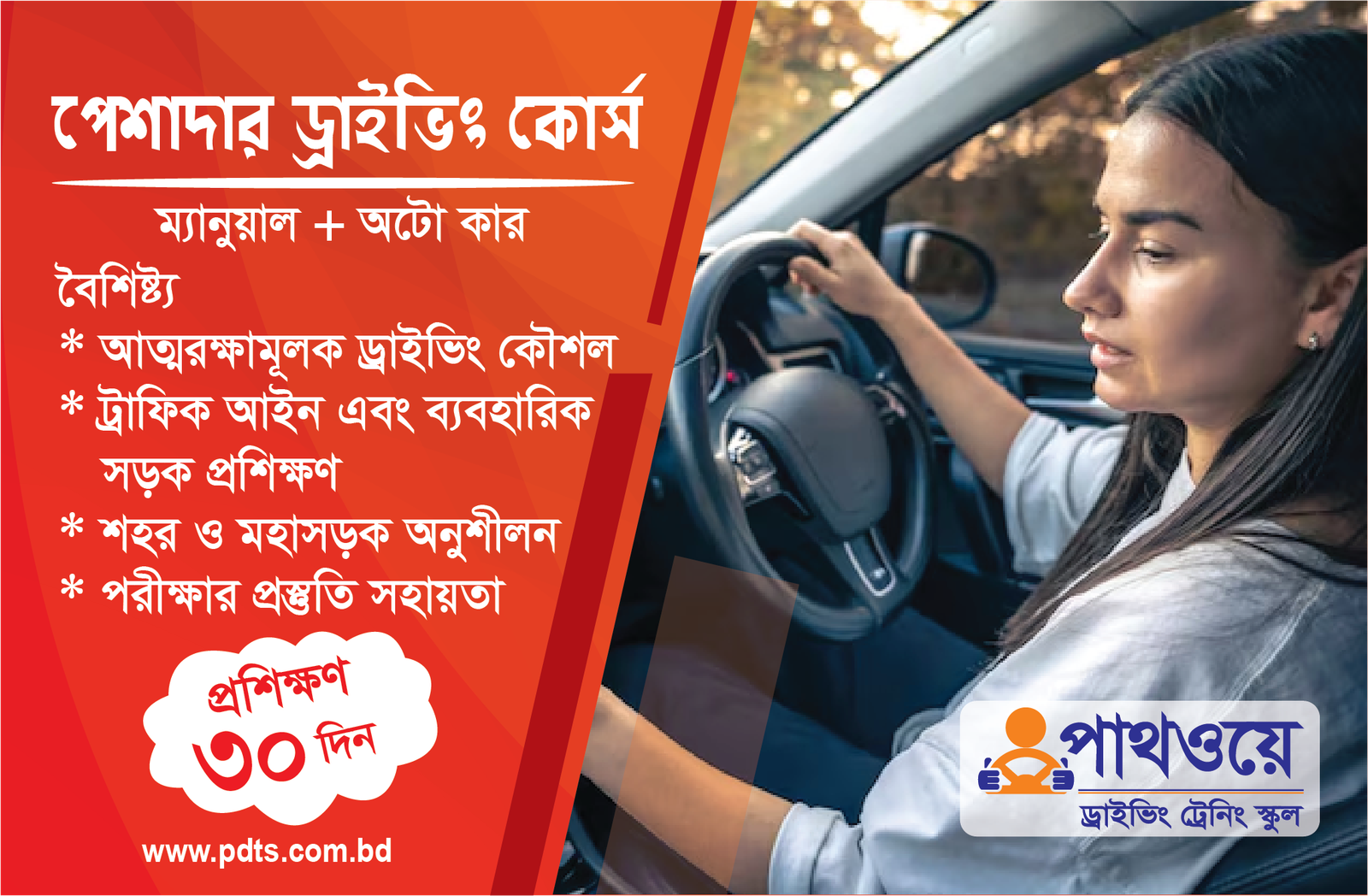
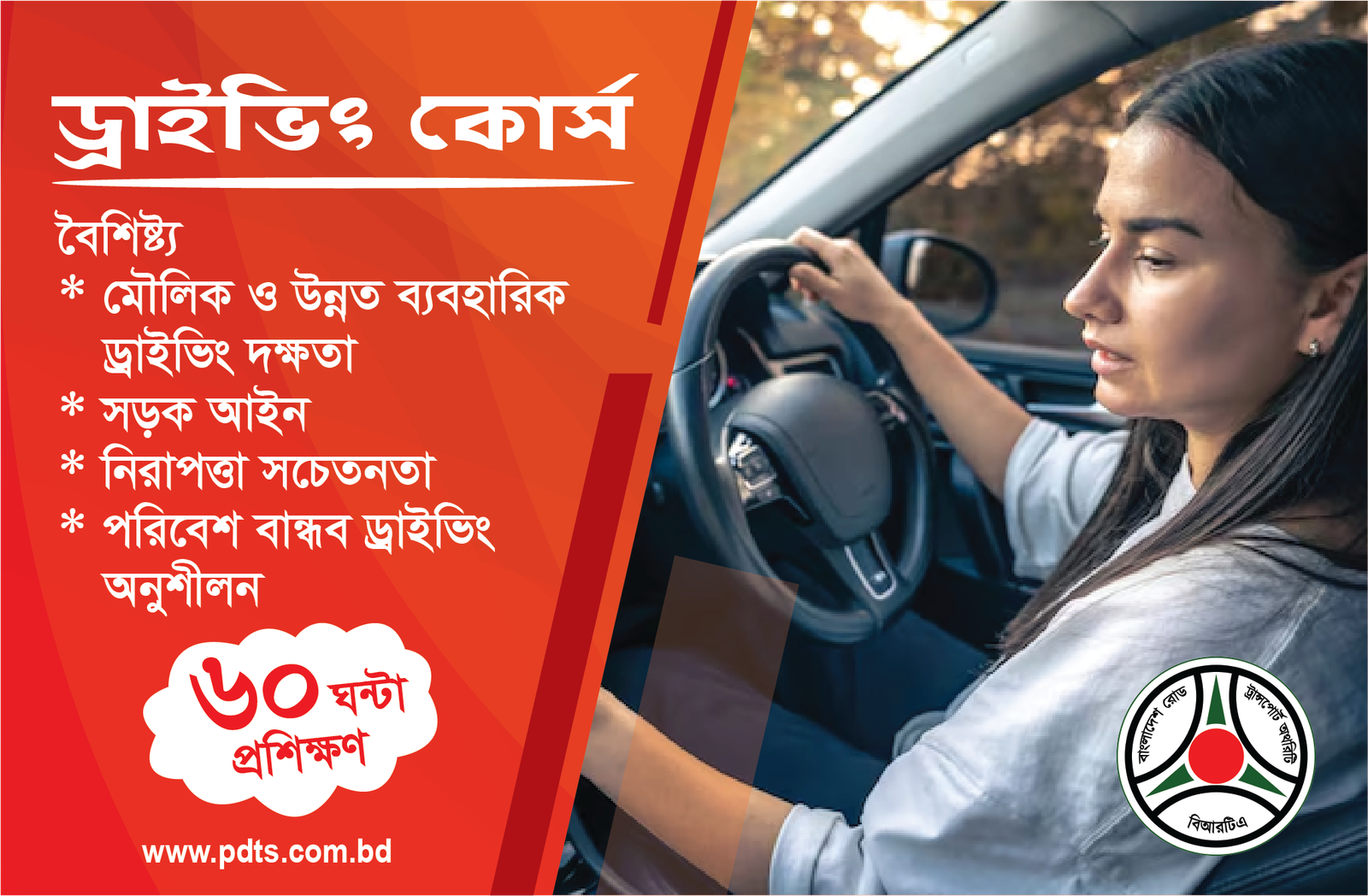
The BRTA 60 Hour Driving Training Curriculum is a comprehensive and structured program designed to integrate theoretical knowledge, basic and advanced practical driving skills, road laws, safety awareness, and environment-friendly driving practices. The primary objective of this curriculum is to develop a skilled, responsible, law-abiding, and humane driver who is capable of driving confidently in real-world road conditions.
Becoming a
competent driver requires more than learning how to operate a vehicle. It
demands in-depth knowledge of traffic laws, practical road experience, safety
consciousness, ethical behavior, and social responsibility. Keeping these
objectives in focus, the BRTA-approved 60-hour Integrated Driving Training
Course has been developed to ensure complete driver competency through
theory, practice, and final evaluation.
1.
Classroom Lecture (Theoretical Session) – 10 Hours
This
session provides trainees with essential theoretical knowledge related to road
management, traffic laws, and vehicle fundamentals.
Road
Signs and Symbols
- Speed limits, directional
signs, pedestrian crossings, and international road signs
Duration: 3 Hours
Traffic
Control Systems
- Traffic signals, regulatory
signs, warning signs, and special situation indicators
Duration: 3 Hours
Theoretical
Driving Skills
- Engine start and shutdown
procedures
- Use of clutch, brake, and
accelerator
- Gear shifting techniques
- Types of parking (Parallel,
Bay, Multi-level)
- Basic vehicle mechanical
concepts
Duration: 3 Hours
Vehicle
Maintenance and Repair
- Basic maintenance knowledge
and preventive care
Duration: 1 Hour
First
Aid and Golden Hour Concept
- Emergency response after
accidents and safe hospital transfer
Duration: 1 Hour
Bangladesh
Road Transport Act & Regulations
- BRTA rules, traffic
regulations, and road safety laws
Duration: 2 Hours
2.
Basic Practical Training (Basic Practical Session) – 25 Hours
This phase
focuses on developing fundamental driving skills through hands-on practice.
Basic
Driving Practice
- Straight-line driving
- Steering control
- Braking techniques
- Gear shifting
Duration: 5 Hours
Road-Based
Practical Training
- Turning techniques
- Lane changing
- Overtaking
- Traffic signal compliance
- Pedestrian crossing management
Duration: 20 Hours
3.
Advanced Practical Training (Advanced Road Test) – 7 Hours
This
session enhances driving skills in complex and challenging road conditions.
- Highway and expressway driving
- Reverse driving and complex
parking (Parallel, Bay, Multi-level)
- Driving on hilly and sloped
roads
- Driving on wet and slippery
surfaces
- Ferry boarding and
disembarking
- Complex intersection driving
- Concepts of Vehicle Priority,
Road Priority, and Residential Priority
4. Mock
Test Session – 3 Hours
This
session prepares trainees for the actual driving license examination.
- Simulated road test scenarios
- Sudden Breaking and emergency
maneuvering
- Practical driving in urban and
rural road environments
5.
Skill Development & Final Evaluation – 5 Hours
Safety
and Emergency Management
- Defensive driving techniques
- Emergency braking
- Hazard light usage
- Tire burst handling
- Fire emergency response
- Basic first aid
Duration: 2 Hours
Final
Assessment & Test Drive
- Written examination
- Practical field test
- City road evaluation drive
- Instructor performance report
Duration: 3 Hours
6.
Environment-Friendly Driving – 5 Hours
- Sources and impacts of noise
and air pollution
- Health and legal implications
- Vehicle maintenance
responsibilities
- Eco-driving techniques
- Fuel-efficient driving
practices
- Car pooling and public
transport usage
- Electric and hybrid vehicle
awareness
7.
Other Essential Topics – 5 Hours
- Ethical behavior with women,
children, elderly, and persons with disabilities
- Respect for traffic laws and
professional driver mindset
- Driver hygiene and passenger
service etiquette
- Defensive driving and risk
management
- Priority for emergency
vehicles
- Legal responsibilities and
compensation regulations
Conclusion
This 60-hour comprehensive driving training curriculum is designed not merely to produce licensed drivers, but to develop responsible, ethical, and safety-oriented drivers. By combining real-world driving experience, legal knowledge, modern driving techniques, and environmental awareness, this course effectively meets the demands of modern road transportation and national road safety objectives.
FEE
BDT 20,000
Available Branches
Includes
 Course Duration:
60
Days
Course Duration:
60
Days BDT 20,000
 Professional - BRTA Approval Driving Course